NONSURGICAL TREATMENTS · NORTH ALABAMA
Botox and Juvéderm in Decatur, Alabama
Understand the difference between wrinkle-relaxing injections and fillers, compare results and costs, and know what to ask before treatment.
Botox and Juvéderm address different concerns. Botox temporarily reduces selected muscle activity that contributes to expression lines. Juvéderm is a family of hyaluronic acid fillers used to add volume and soften certain folds. Choosing between them starts with identifying what is causing the change you see. [2][3]
If you are considering Botox or Juvéderm in Decatur, AL, this guide explains treatment options, historical before-and-after examples, recovery, and questions for a consultation in Decatur, Huntsville, or Athens.
ON THIS PAGE
Botox vs. Juvéderm at a glance
An expression line, a loss of fullness, and loose skin may need different approaches. Ask the clinician to examine your face at rest and in motion before recommending a product.
| Botox Cosmetic | Juvéderm fillers |
|---|---|
| Action | |
| Temporarily relaxes targeted muscles. | Action Adds volume with an injectable gel. |
| Uses Frown lines, forehead lines, crow’s feet, selected neck bands. |
Uses Certain facial folds, lip fullness, or volume loss; the product matters. |
| Onset Builds over several days. |
Onset Volume change can be immediate; swelling affects the early appearance. |
| Maintenance Repeat treatment may be needed. |
Maintenance Temporary results; reassess before adding more. |
Comparison sources: current Botox labeling, AAD patient guidance, and Juvéderm product information. [1][2][3][9]
If your concern is drooping eyelid or forehead tissue, ask how injections compare with an eyelid or forehead lift. A consultation should explain the limits of each option before you commit to treatment.
How Botox works
BOTOX Cosmetic is the brand name for onabotulinumtoxinA. It interrupts signaling that makes selected muscles contract. The effect is temporary. Treatment planning should preserve useful facial movement while addressing the lines that concern you. [1][8]
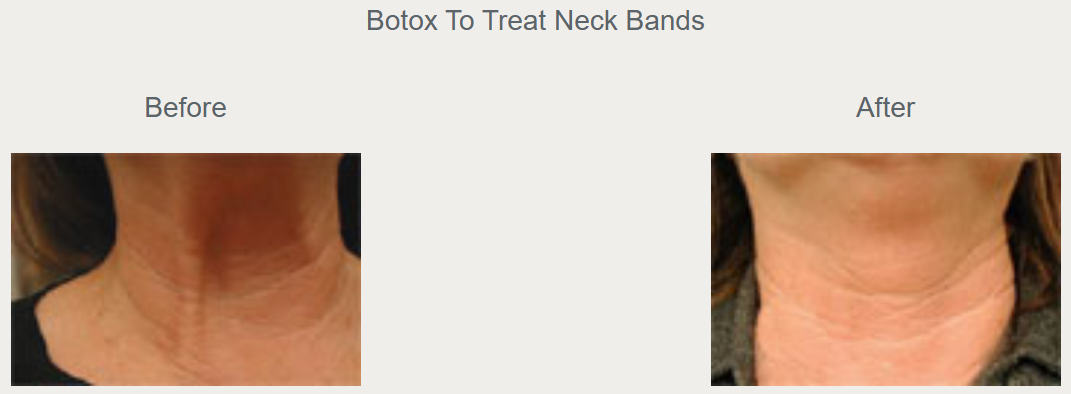
Its current U.S. labeling includes temporary improvement of moderate to severe frown lines between the eyebrows, crow’s feet, forehead lines, and platysma bands in adults. Platysma bands are vertical muscle bands in the neck; this approval does not cover every type of neck wrinkle or loose skin. [1]
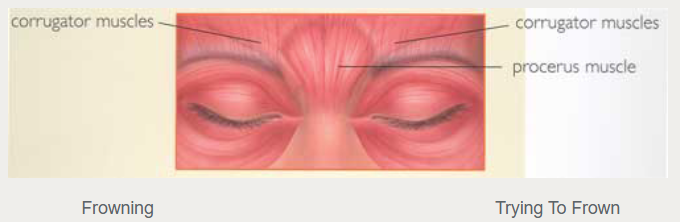
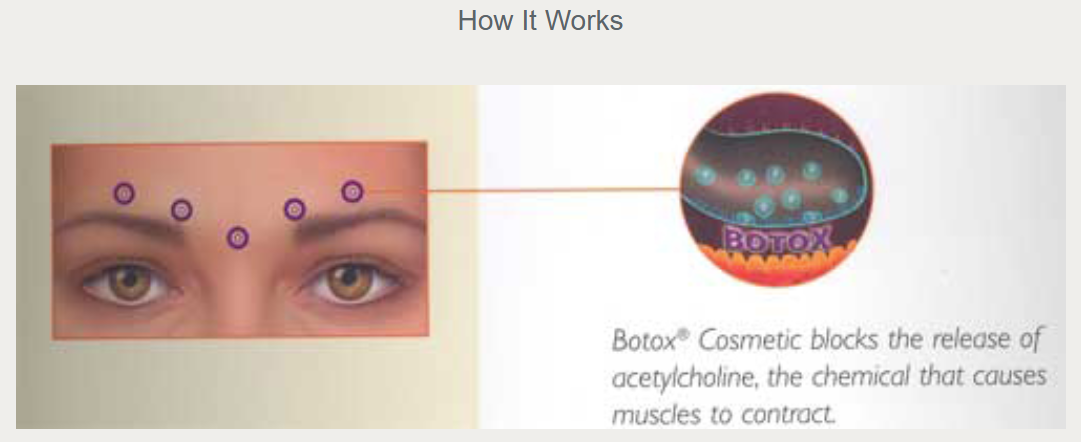
The AAD notes that many people notice improvement within three to seven days, with effects commonly lasting about three to four months. The onset and duration vary; agree on a review date with your clinician rather than judging the outcome immediately. [2]
What Juvéderm can treat
Juvéderm fillers contain hyaluronic acid, a substance also found naturally in the body. Different gels have different intended uses and placement depths. Ask for the exact product name and patient information, rather than assuming all Juvéderm treatments are interchangeable. [3][4]
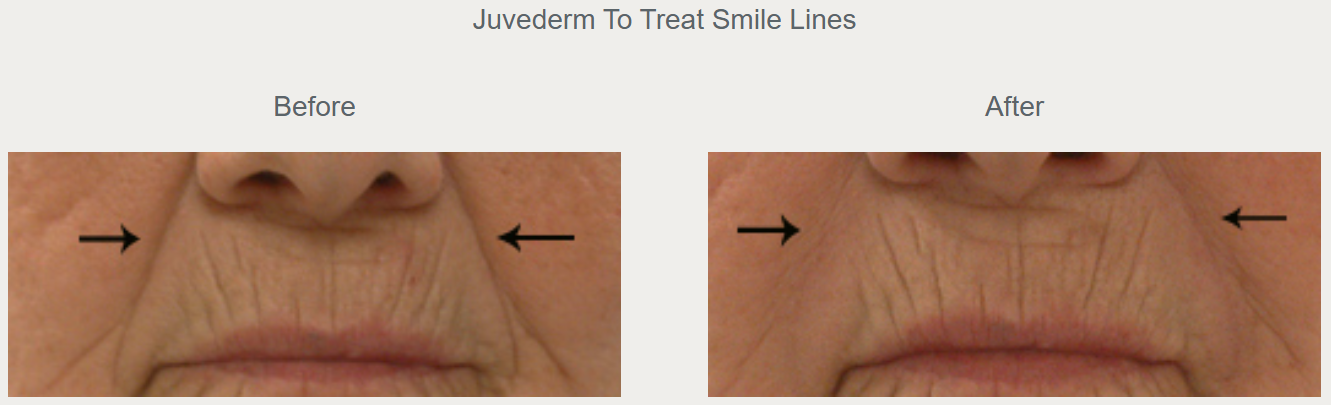
- Facial folds: products such as VOLLURE XC and ULTRA PLUS XC are used for wrinkles and folds such as nasolabial folds beside the nose and mouth. [5]
- Lips: ULTRA XC and VOLBELLA XC have lip-augmentation uses; VOLBELLA XC also treats perioral lines. [6]
- Cheeks: VOLUMA XC is used for age-related cheek volume loss. Treatment of other regions depends on the specific product’s labeling. [7]
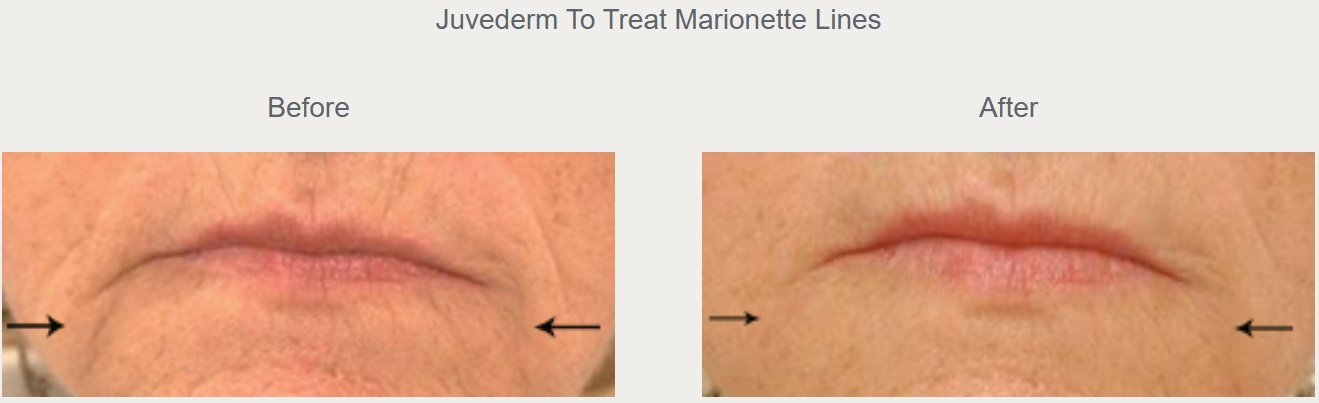
Marionette lines run downward from the mouth corners. If these are your concern, ask which product is proposed, whether that specific use falls within its FDA-approved labeling, and what contribution volume loss or tissue descent makes to your appearance.
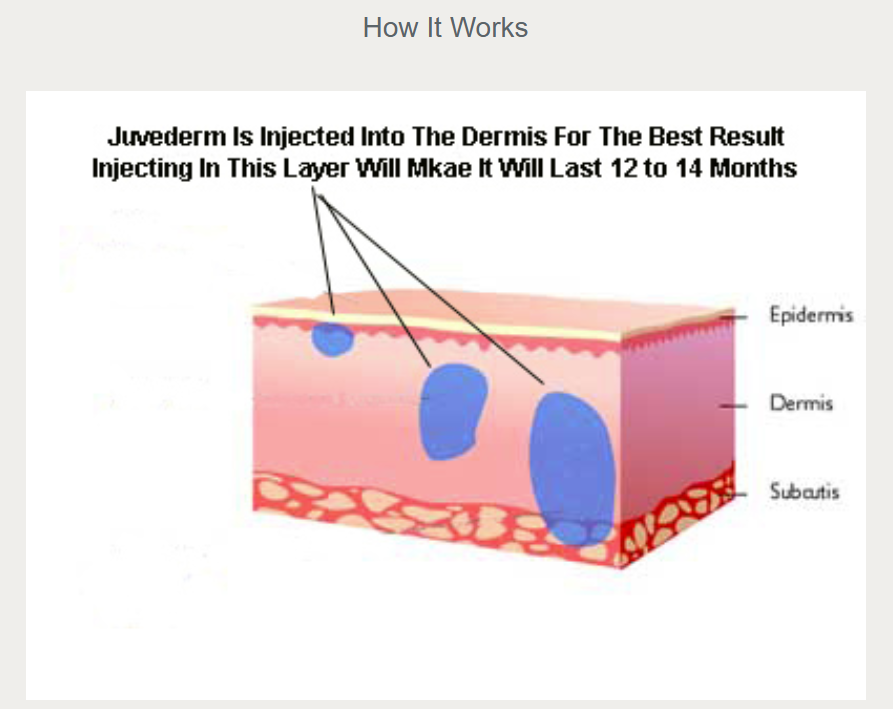
About the older diagram below: its wording about placement and “12 to 14 months” is historical. Injection depth and expected duration depend on the product and treatment area; the diagram’s statement should not be used as a universal treatment rule. [3][5][7]
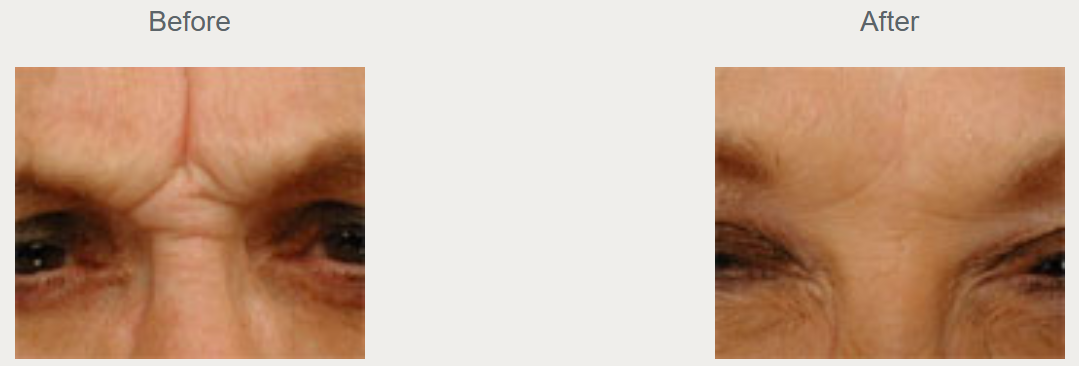
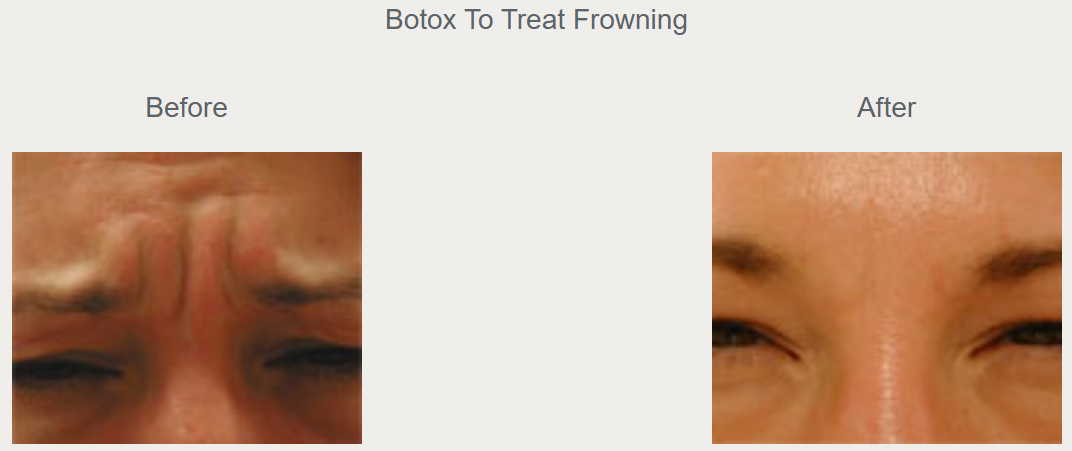
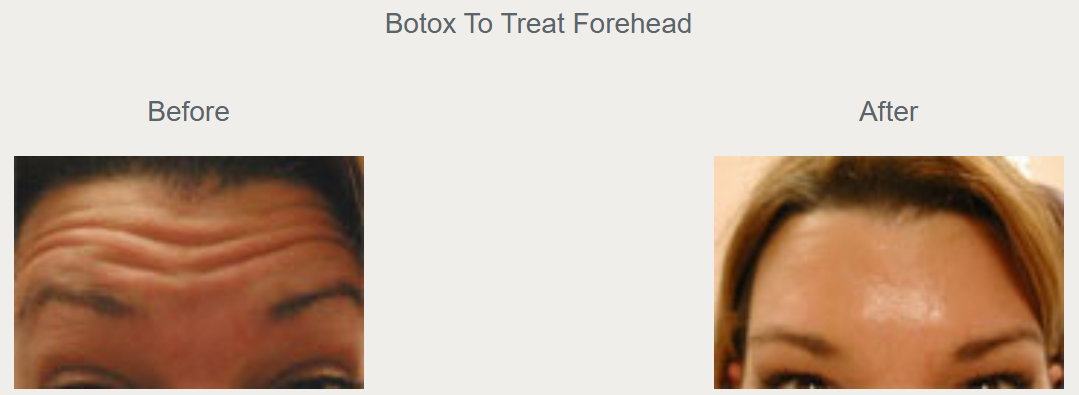
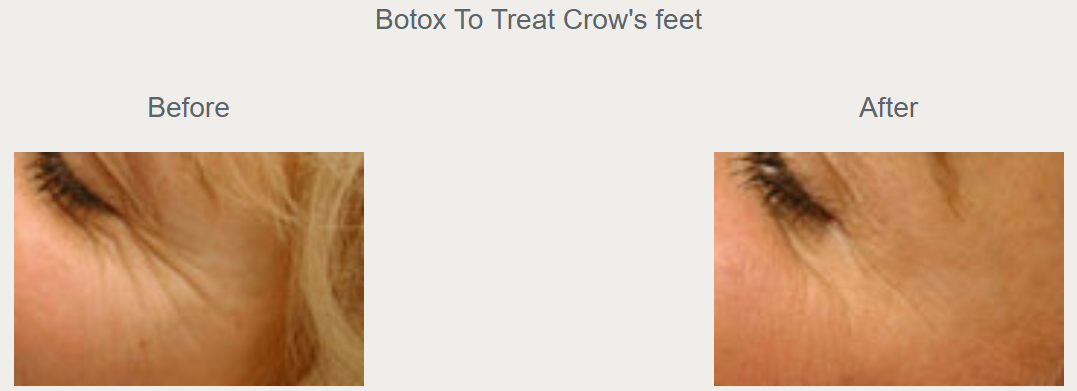
Before and after photos from the original page
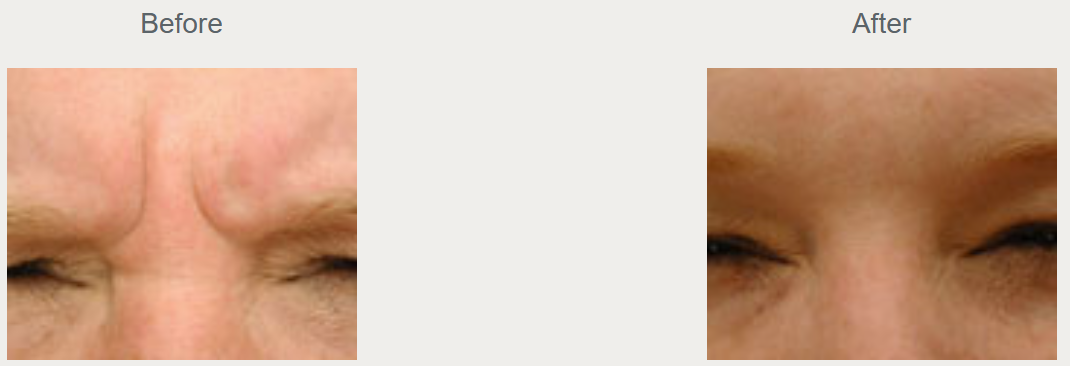
These eight comparisons come from the original site material supplied for this guide. The old article describes the Botox after-images as taken during the full effect and the Juvéderm after-images as taken at varying times. Exact intervals, doses, product details, and other treatments are not documented here.
The files retain their original labels and appearance. Differences in lighting, facial expression, and camera position can affect comparisons. These images illustrate historical examples, do not predict your result, and are not evidence of care offered by this website today. Select an image to open the original.
Botox comparisons
Juvéderm comparisons
Candidacy and preparation
A consultation should cover your goals, prior cosmetic treatments, medical conditions, allergies, and all medicines and supplements. Bring the names and dates of previous toxin or filler treatments if you have them. Mention any earlier reaction, eyelid weakness, or swallowing or breathing problem. [12]
- Botox: an injection-site infection or allergy to a botulinum toxin product or its ingredients can rule out treatment. Neuromuscular disorders and interacting medicines require particular review. [1]
- Juvéderm: disclose severe allergies, previous filler reactions, and any lidocaine allergy. Active skin inflammation or infection in the treatment area may require postponement. [3]
- Pregnancy or breastfeeding: discuss delaying elective treatment. Cosmetic botulinum toxin injections are not recommended during these periods, and filler safety has not been established. [10][11]
Do not stop prescribed aspirin, blood thinners, or another medicine on your own. Some medicines and supplements can increase bruising, but any change should be coordinated with the prescribing clinician. The original page’s blanket instruction to stop pain medicines for seven to ten days is not suitable for every patient. [12]
Tell the office about any upcoming event, dental work, or other planned facial treatment. Ask how much time to allow for a review visit and visible swelling or bruising. A first treatment immediately before an important occasion leaves little room to assess the result.
What happens during the treatment visit?
The visit should begin with assessment and informed consent. Ask the clinician to explain the intended change, alternatives, and risks before injections begin. You should know which product will be used and how to contact the practice afterward.
Botox is injected into selected muscles in small amounts. Juvéderm is placed using a needle or cannula, depending on the treatment plan. Juvéderm’s lidocaine helps reduce injection discomfort, but pressure, stinging, or tenderness can still occur. Additional numbing may be appropriate. [3][8][9]
The AAD describes many filler procedures as taking about 15 to 30 minutes. Allow additional time for discussion and preparation, particularly at a first appointment. An office procedure can still have meaningful risks; a short appointment is not a reason to skip the consultation. [9]
Recovery, work, and aftercare
Many people return to ordinary activities after injections, but that does not guarantee an absence of visible swelling, redness, or bruising. Plan around both your work duties and your comfort with those temporary changes. [8][9]
- After Botox: avoid rubbing or massaging the injected areas. The AAD advises waiting at least two hours before strenuous activity; follow the specific instructions your clinician gives you. [8]
- After filler: the AAD advises waiting until the following day for strenuous exercise. Avoid pressing or massaging the area unless your clinician specifically instructs you to do so. [9]
- Makeup and skin care: ask when to restart them and how to clean the treated area gently. Instructions should account for your injection sites and any skin irritation.
- Follow-up: keep the planned review visit and contact the office about an unexpected change. Do not add treatment simply because the appearance is uneven while swelling is still settling.
Minor filler reactions often improve over one to two weeks, although recovery varies by product, area, and person. Ask which symptoms should be reported promptly and which require emergency care; the warning signs below should not wait for a routine review. [9]
How long do the results last?
Both treatments need a realistic maintenance plan. Botox commonly lasts around three to four months, while filler duration depends on the exact gel and where it is used. Neither approach stops future aging. [2][3]
Manufacturer examples for Juvéderm, all with optimal treatment and variable individual results, include:
- VOLLURE XC in smile lines: up to 18 months; ULTRA PLUS XC in smile lines: up to one year. [5]
- VOLBELLA XC or ULTRA XC in the lips: up to one year. [6]
- VOLUMA XC in the cheeks: up to two years. [7]
These are product-specific examples, not a promised schedule for your face. Ask whether the expected result assumes a touch-up and what ongoing visits would cost. A review should consider your current appearance and preferences before repeating treatment.
Risks and warning signs
Botox risks
Possible effects include injection-site bruising or soreness, headache, and temporary drooping of a brow or eyelid. The location, amount, and spread of the medicine influence the outcome. [8]
Get emergency medical help for trouble breathing, swallowing, or speaking after treatment. Botox carries a boxed warning that toxin effects can spread beyond the injection site; symptoms may occur hours to weeks later. [1]
Filler risks
Filler can cause swelling, bruising, tenderness, lumps, infection, or allergic reactions. Some problems can appear later. Rare accidental injection into a blood vessel can cause tissue damage, blindness, or stroke, with potentially permanent consequences. [10][11]
Seek immediate medical attention for unusual pain, vision changes, or skin turning white, gray, or blue near a filler injection site. Call 911 for stroke symptoms or sudden vision loss. Tell the treating clinician promptly; do not wait for a scheduled follow-up. [10]
Ask how the office recognizes and manages complications and where it sends patients who need urgent specialist care. A claim that filler is easy to dissolve should not be treated as a guarantee that every complication can be reversed. [10]
Costs and insurance
For national context, ASPS currently lists an average of $435 for botulinum toxin injections and $715 for hyaluronic acid fillers. These are broad category averages, not a Decatur quote or a brand-specific Juvéderm price; the amount of treatment and what the fee includes can differ. [13][14]
Ask for a written estimate identifying the exact product, planned areas, quantity, and total charge. Clarify whether review appointments or touch-ups cost extra. Botox quotes may be based on units or treatment areas; filler estimates should specify the proposed syringes and their volume. [13][14]
Botulinum toxin units are specific to the product and cannot be directly compared across brands. A cheaper price per unit alone does not establish better value. [1]
Cosmetic injections are generally paid for out of pocket. Botox used for a separately diagnosed medical condition is a different treatment and coverage question; do not assume that medical benefits cover cosmetic wrinkle treatment. [13][14]
Choosing a clinician in Decatur, Huntsville, or Athens
Start by identifying who will assess you and who will perform the injections. Ask about training in facial anatomy, experience with the exact product and area, and the plan for follow-up or complications. The FDA recommends a licensed provider with relevant training and experience. [11]
For physicians, check license status and available public actions through the Alabama medical board’s licensee search. Its specialty entry is not independently verified board certification. If a physician claims plastic surgery board certification, check the American Board of Plastic Surgery directly. [16][17]
Confirm the source of the injectable product. The FDA has reported hospitalizations linked to counterfeit Botox and advises patients to ask whether products come from authorized sources. Filler should arrive in properly labeled, sealed packaging; avoid online self-injection products and needle-free filler pens. [11][15]
If you travel to Huntsville or Athens for treatment, ask where an urgent assessment would happen and who is available after hours. Compare the complete care arrangement as well as the quoted price. This website does not verify or endorse individual local providers.
Common questions
Can I have Botox and Juvéderm at the same visit?
A clinician may propose both when there are different concerns to address. That requires an individualized plan. The FDA notes that combined use of fillers with Botox or other treatments has not been evaluated in controlled clinical studies; ask about timing, alternatives, and the added uncertainties. [10]
Will Botox make me look frozen?
That is not an inevitable result. The AAD describes targeting selected muscles while preserving other expressions. Tell the clinician how much movement you want to retain; no particular look can be guaranteed. [8]
Is Juvéderm permanent?
No. These hyaluronic acid fillers provide temporary effects. How long a visible change lasts depends on the product and area, and a repeat treatment should follow reassessment. [3]
Can I get injections during a lunch break?
The injections themselves may fit into a short visit, but allow time for assessment, consent, and aftercare instructions. Consider possible bruising or swelling and whether you can follow the activity guidance. A first visit is best planned without rushing.
Does FDA approval mean any Juvéderm product can go anywhere?
No. Approvals apply to specific products and uses. Check the name, intended area, age indication, and patient labeling. A familiar brand name alone does not answer whether a proposed treatment is appropriate. [4]
Sources and further reading
Medical information and linked resources checked September 21, 2026. This guide updates the supplied historical article. It has not been reviewed by a clinician on behalf of this website. Manufacturer sources support product-specific uses and duration examples.
- National Library of Medicine, DailyMed. BOTOX Cosmetic prescribing information and Medication Guide.
- American Academy of Dermatology. Botulinum toxin therapy overview.
- Juvéderm / AbbVie. How Juvéderm works and important safety information.
- U.S. Food and Drug Administration. FDA-approved dermal fillers.
- Juvéderm / AbbVie. Fillers for smile lines.
- Juvéderm / AbbVie. Fillers for lips.
- Juvéderm / AbbVie. VOLUMA XC for cheeks.
- American Academy of Dermatology. Botulinum toxin therapy FAQs.
- American Academy of Dermatology. Fillers FAQs.
- U.S. Food and Drug Administration. Dermal fillers: risks and patient information.
- U.S. Food and Drug Administration. Dermal filler do’s and don’ts.
- American Academy of Dermatology. Preparing for botulinum toxin therapy.
- American Society of Plastic Surgeons. Botulinum toxin cost.
- American Society of Plastic Surgeons. Dermal filler cost.
- U.S. Food and Drug Administration. Counterfeit Botox found in multiple states.
- Alabama Board of Medical Examiners and Medical Licensure Commission. Licensee search.
- American Board of Plastic Surgery. Verify certification.